
Twitter's first onboarding experience, designed from scratch.
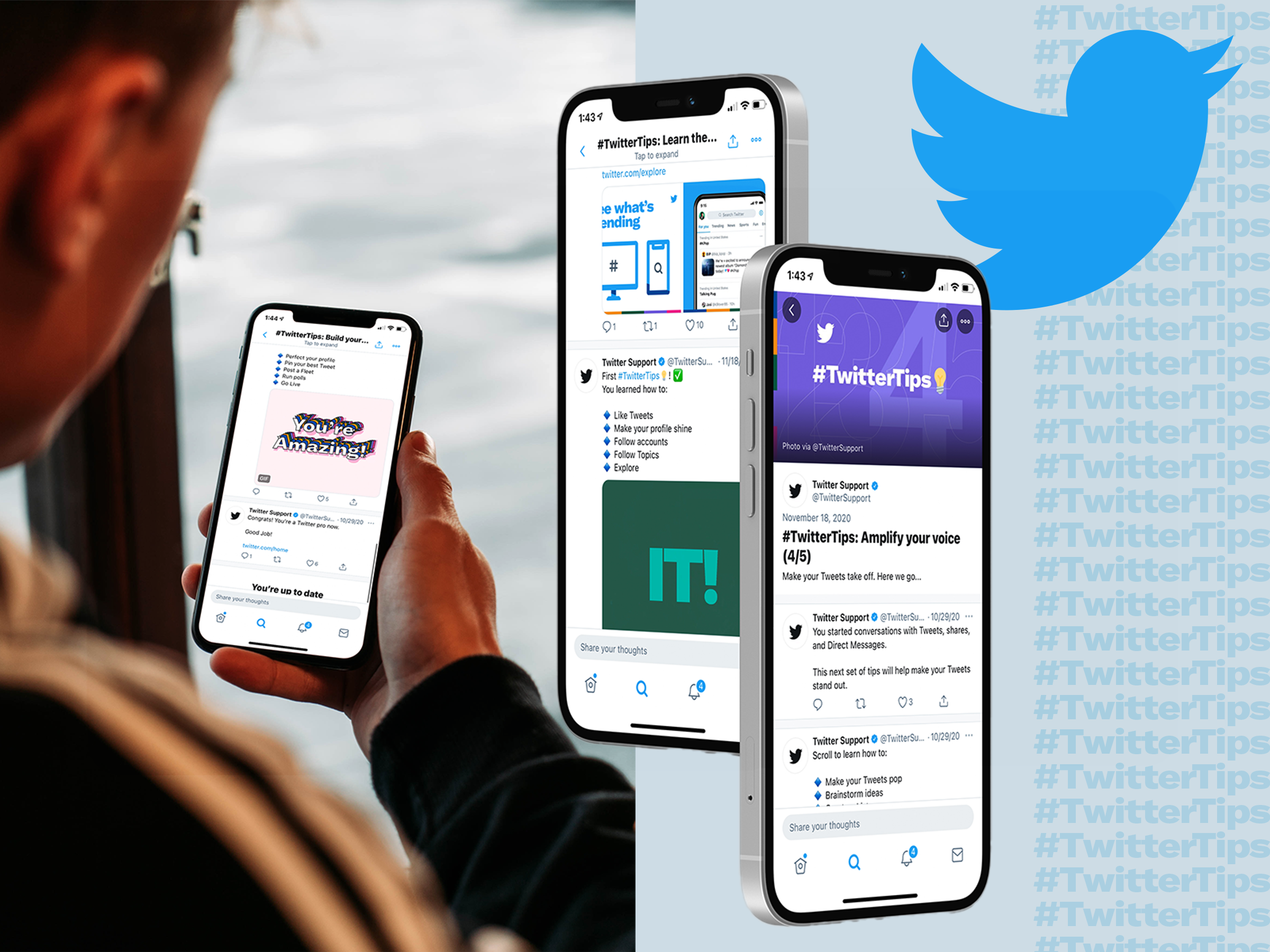
I led UX/UI design and art direction for #TwitterTips, Twitter's inaugural new user onboarding. A gamified, in-platform experience that turned first-time users into habitual ones.
The impact: the first structured onboarding in Twitter's history became the foundational model for new-user education across the platform, shaping later programs including Twitter's Flight School.
Twitter had a retention problem. New users were signing up, looking around, and leaving, often within days. The platform was powerful but complex, and there was no structured path to help someone go from "I just signed up" to "I use this every day."
Twitter needed an onboarding experience that could teach platform fundamentals without pulling users out of the app; and it needed to feel native to the brand, not like a tutorial bolted on as an afterthought.
Nothing like this existed yet. We were building it from zero.
The Challenge
I served as the UX/UI designer and art director on this project at Mindspace, working in direct collaboration with Twitter's internal teams — including the Getting Started web team and multiple stakeholder groups across the organization.
My responsibilities spanned the full design surface: user journey mapping, wireframing, visual design, art direction, and brand execution across every touchpoint.
My Role
The Approach
We started with research. I participated in interviews with Twitter team members, new users, and long-time power users to understand where the onboarding experience broke down and what habits separated retained users from abandoned accounts. We also ran a competitive analysis of how other platforms handled first-time user education.
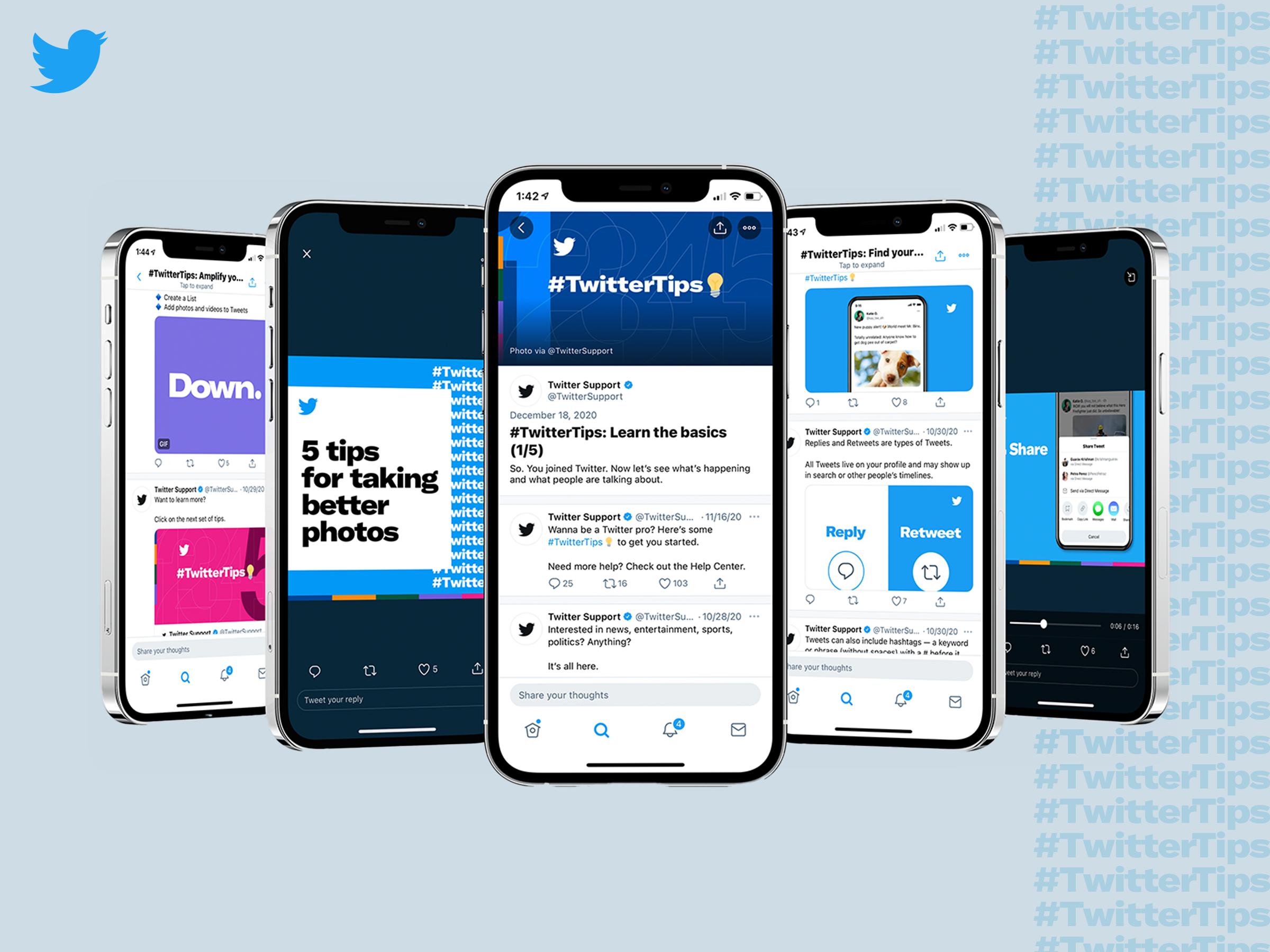
From those insights, I designed #TwitterTips: a library of 25+ short-form, in-app Tweets, GIFs, and threaded content delivered directly to new users inside the platform. The content was built on Twitter's newly introduced Moments feature, making the experience feel native rather than interruptive.
The UX was built around a deliberate user journey: each tip introduced a single concept, rewarded engagement, and guided users progressively deeper into the platform. The gamified structure was designed to build habits, not just deliver information.
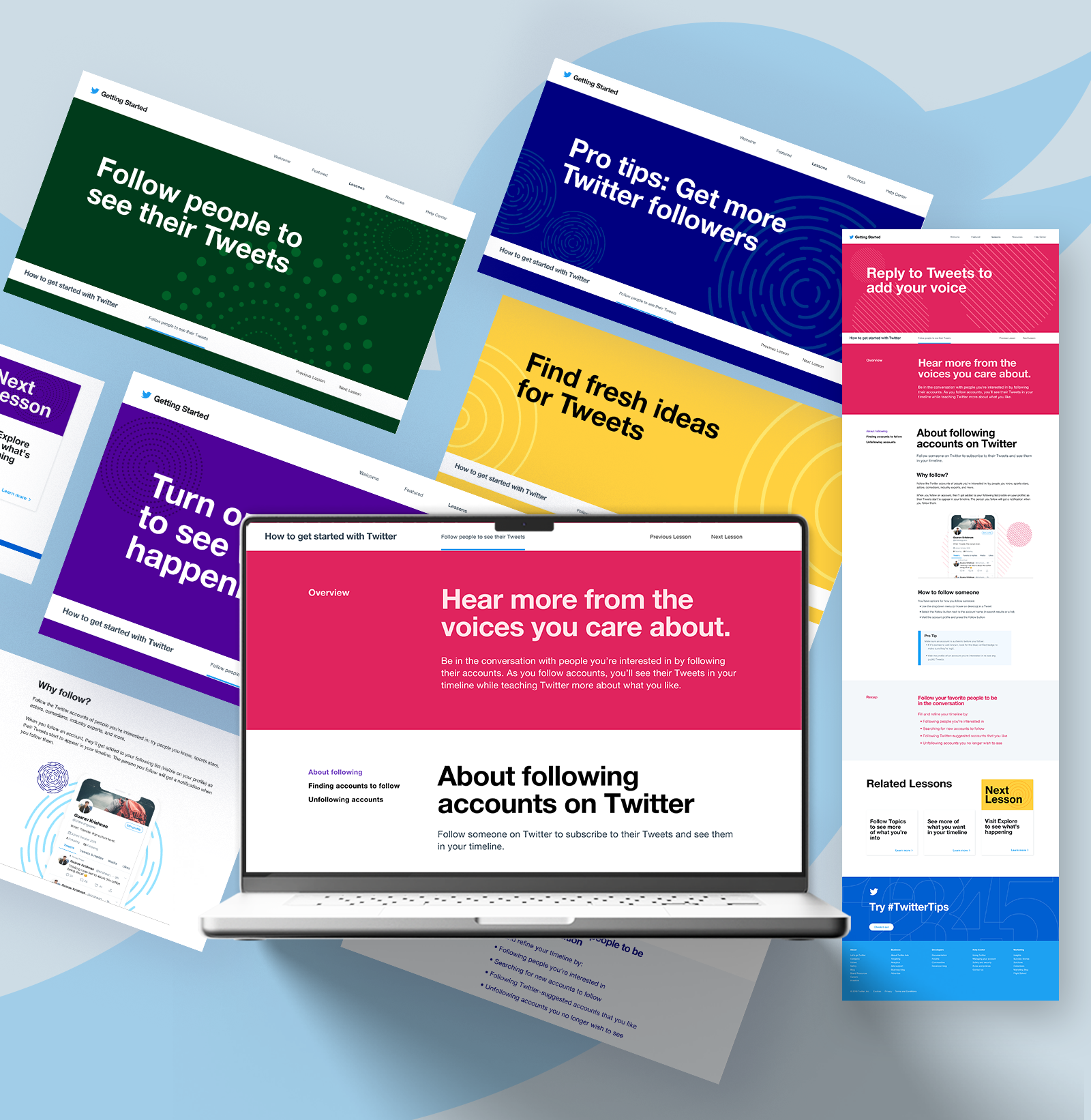
I also designed the Getting Started web pages — longer-form support content that supplemented the in-app tips and gave users a destination for deeper questions. These pages extended the onboarding ecosystem beyond the feed and into a persistent, searchable resource.
Performance Results
#TwitterTips was Twitter's first-ever structured onboarding experience for new users. Before this initiative, there was no in-platform system designed to move someone from sign-up to active, retained user — despite retention being one of the platform's most well-documented growth challenges. At the time, Twitter's weekly churn rate significantly outpaced competitors like Facebook, and independent analyses pointed to retention, not acquisition, as the core barrier to user growth.
The onboarding framework we built directly addressed that gap. #TwitterTips introduced a scalable content model: 25+ pieces of native, in-app educational content that reduced friction for first-time users and created a repeatable path from sign-up to habitual engagement.
While specific retention metrics remain internal, the initiative launched during a period in which Twitter reported that more than half of the 26 million daily active users added in 2019 were directly attributed to product improvements, including onboarding. That same year, Twitter achieved its fastest quarterly mDAU growth on record at 21% year-over-year, reaching 152 million monetizable daily active users by Q4.
Beyond the metrics, the project established a foundational framework and content model for new user education at Twitter. Informing the structure of subsequent onboarding efforts, including Twitter's Flight School program. It proved that a well-designed, brand-native onboarding experience could be built at scale inside the platform itself, without disrupting the core user experience.